Open Hours
Monday – Wednesday – Closed
Thursday – 1 PM – 5 PM
Friday – 1 PM – 5 PM
Saturday – 1 PM – 5 PM
Sunday – 1 PM – 5 PM
We are currently closed for the Winter Season until March 2026.
See you this Spring!
1496 N. Salisbury St, West Lafayette
phone: 765-607-1207 | email: droddel@wlaf.lib.in.us
We accept private tours by reservation.


Preserving Community History
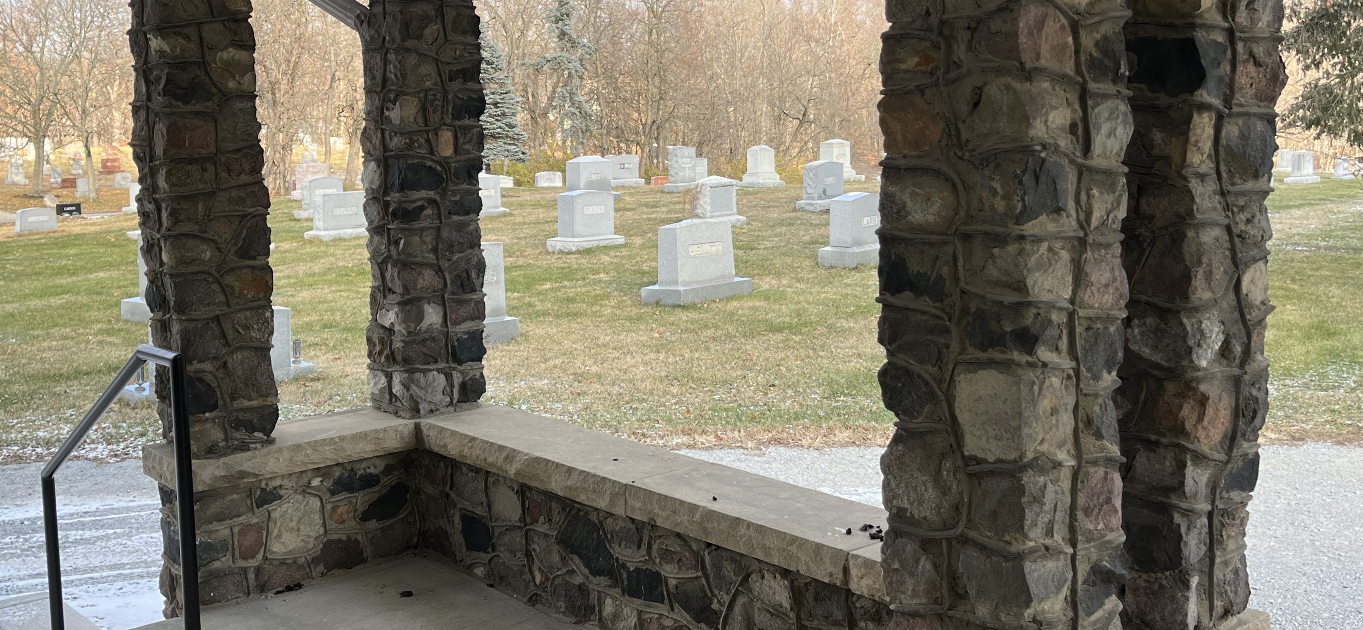
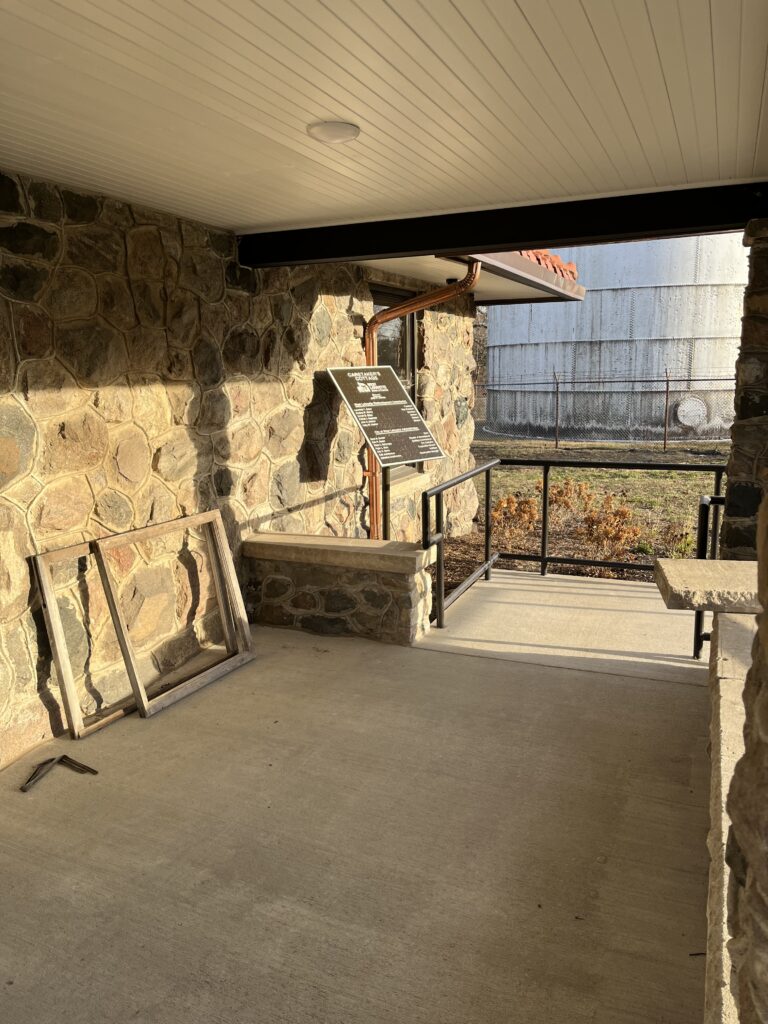
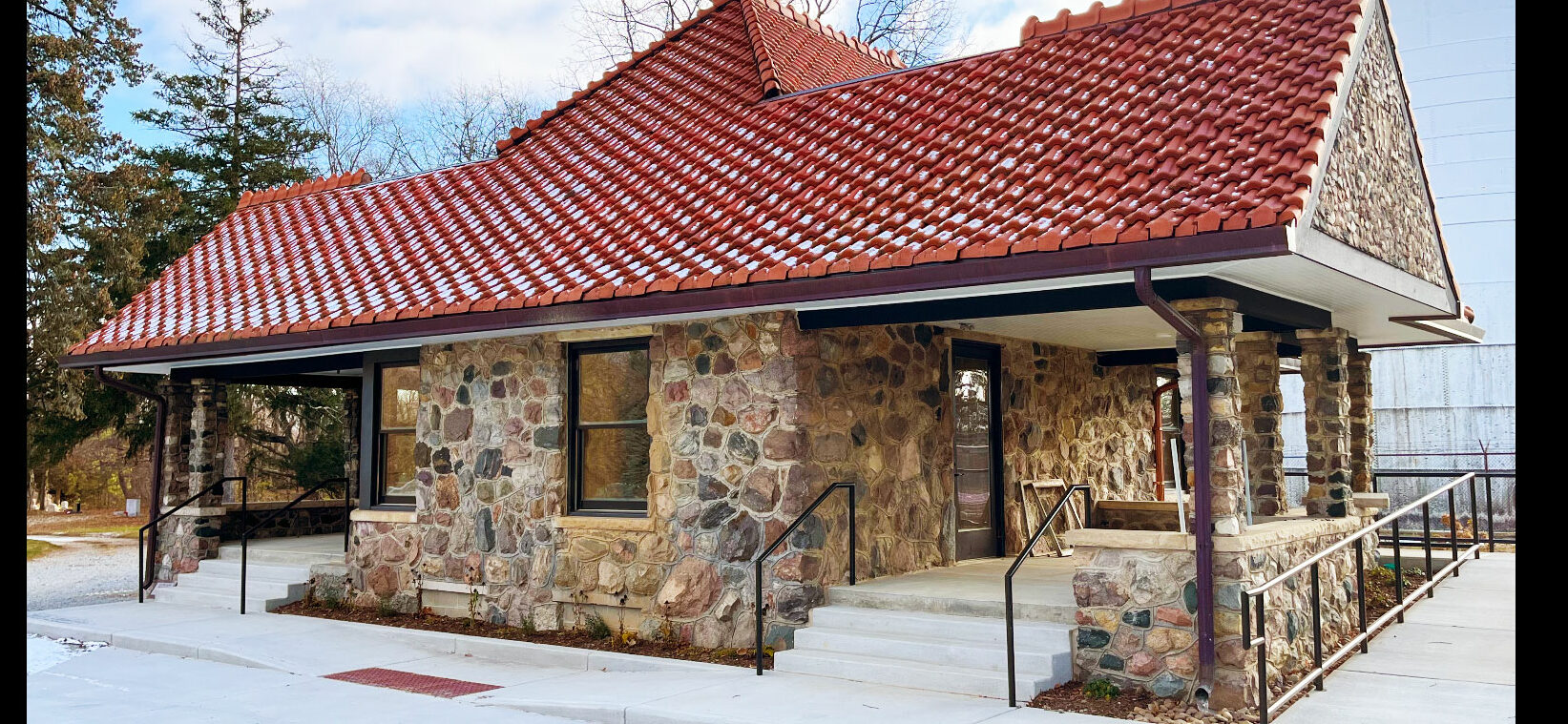
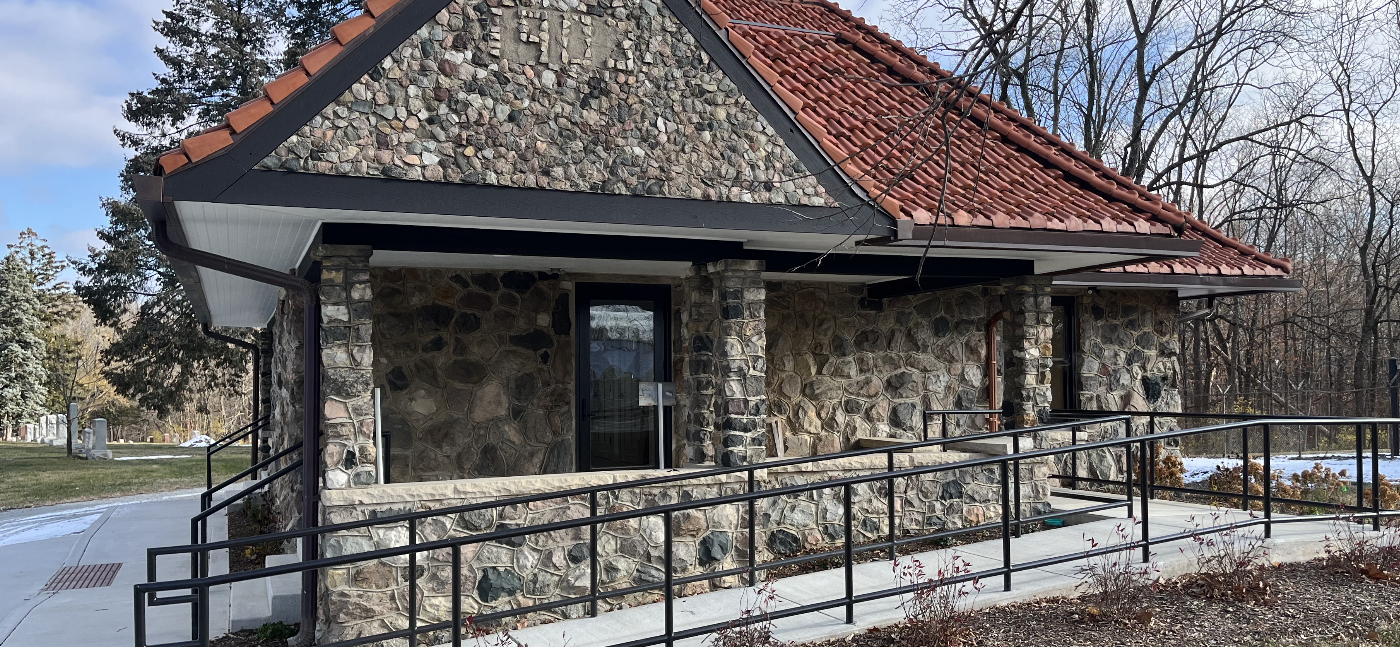
For over a century, the Caretaker’s Cottage has watched West Lafayette grow. Originally fronted by a wrought-iron fence, the cemetery on Salisbury Street is a familiar landmark to many in the community. The cottage, built alongside in 1903 to house Grand View’s grounds laborer, is a window to the community’s past. Constructed of Bedford limestone and with unique terracotta roof tiles, the original design with the iconic double porches included no more than a 3-4 rooms and a root cellar.
While some Caretakers did live in the Cottage with their families, after the Great Depression it was most likely used as an administrative office for the cemetery owner. We know that Mr. Smalley (who owned inherited the cemetery from his father who is buried right near the Cottage), paid local gravediggers like Gerald Rausch from this structure in 1930, there was no live-in Caretaker at that time.
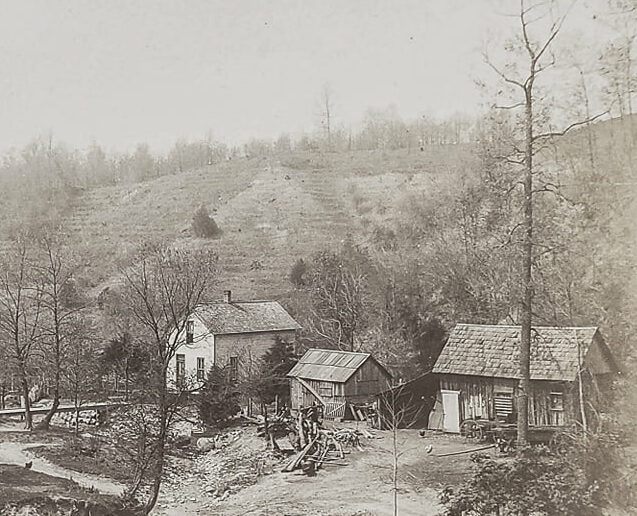
Where once there had been traction cars barreling along interurban tracks through nearby ravines, by the later twentieth century Grand View Cemetery was surrounded mostly by suburban families and by Happy Hollow Park. The area was much less-wooded at the turn of the century, owing to the large agricultural development of the last half of the 19th century. From the large water tower constructed along Salisbury next to the Cottage in 1897, one could could look across the river and see the Tippecanoe County Courthouse clearly.
A Community That Backs Community History

Grand View Cemetery is a private cemetery that was constructed in 1902, and has since changed ownership a few times. Few records exist to tell us who exactly lived in the Cottage over the years before it was eventually placed on the Wabash Valley Trust for Historic Preservation’s Endangered List in 2017, but we do know that it was long abandoned and used as a mower shed by the previous owners until they sold it. The cemetery’s owner at that time was interested in selling the cottage, and the West Lafayette Redevelopment Commission purchased the plot in April of that same year after community was rallied to support this local historic preservation effort.


A local group called CHiPS (Community Historic Project Support) raised donations and support in the community, and worked with the Redevelopment Commission to plan renovation for the Cottage. West Lafayette Public Library’s Local History and Archive Collections was brought-in to develop the newly-renovated space into a local history museum, and work was finished on this project in December of 2023.


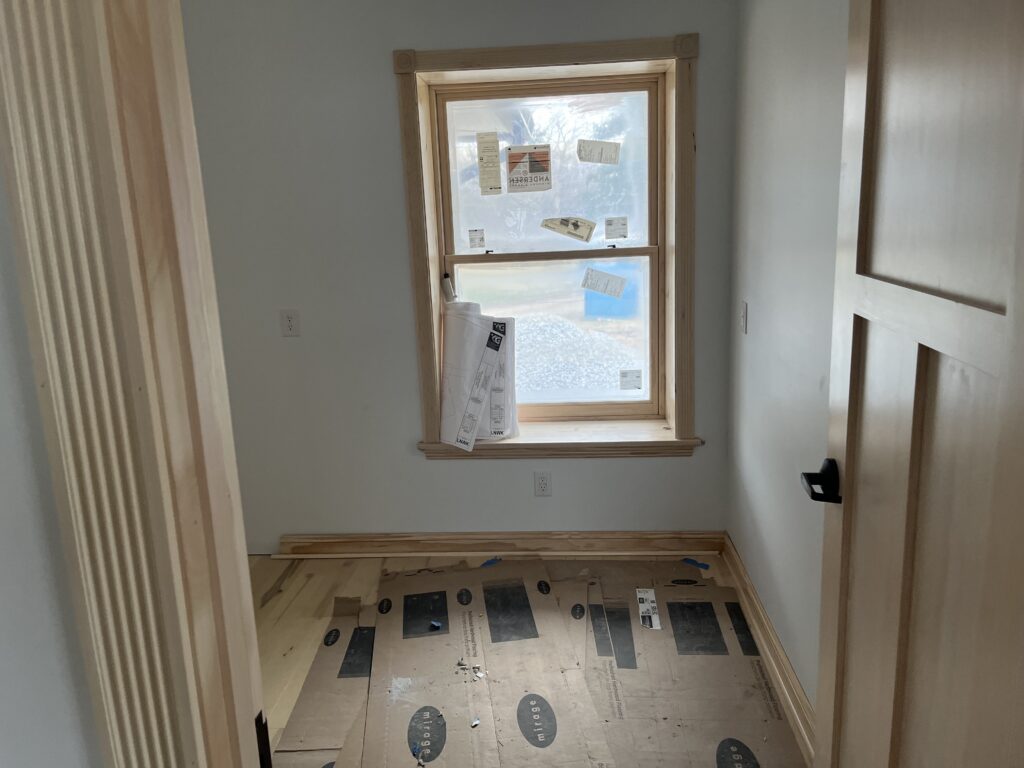
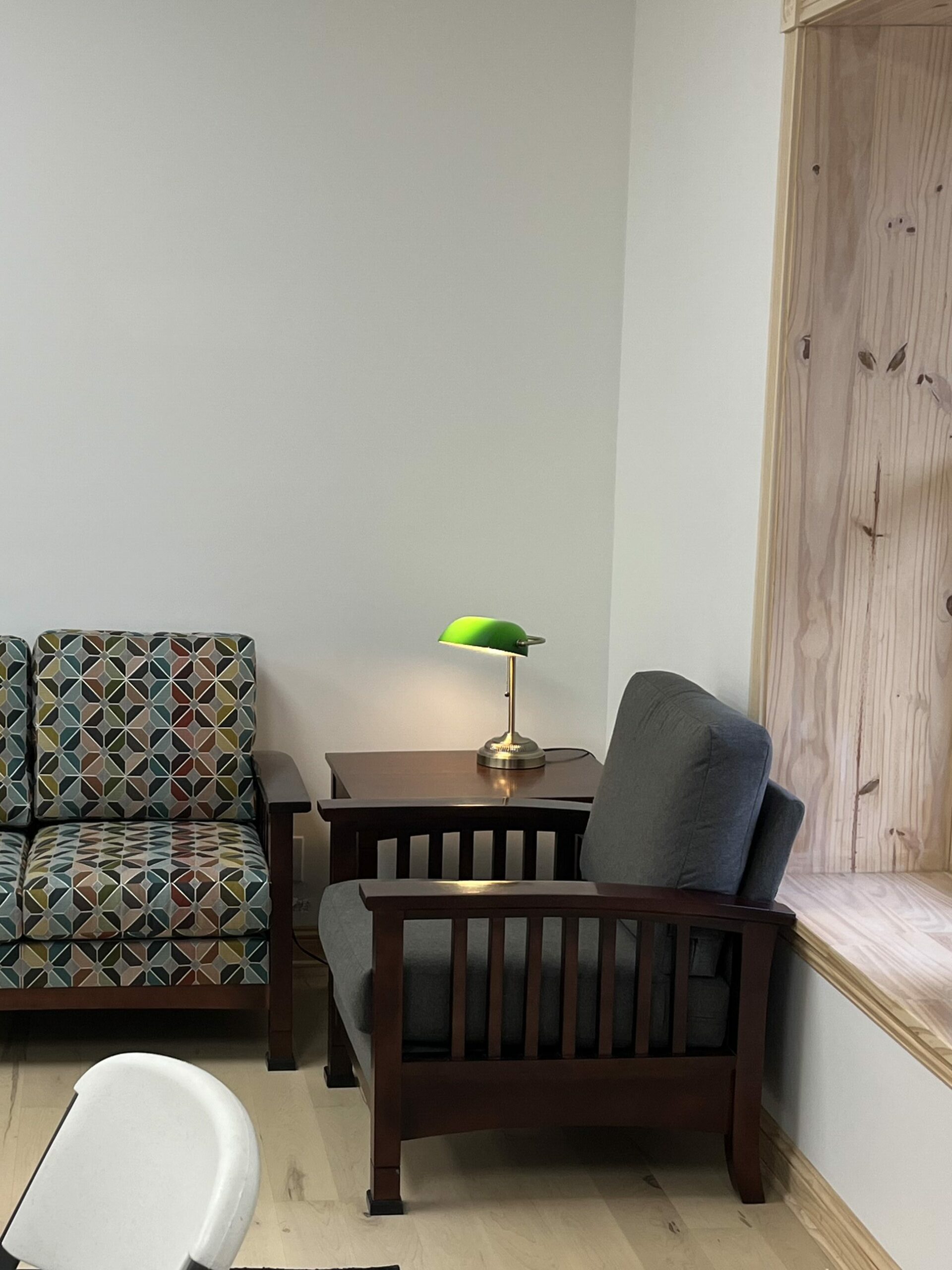
The structure had been well-worn from decades of use, and the floor had completely collapsed in some places. The root cellar was filled-in, and the inside was redone with ash interiors and inset windows. An amazing exhibit at the Cottage shows some images of this state of affairs, along with more information about the CHiPS initiative that saved the Cottage.


Sharing Local History with the Community

West Lafayette Public Library opened the West Lafayette Caretaker’s Cottage Local History Center in March of 2024, with the aim of working with community partners to develop exhibits and displays that highlight local history topics. The Cottage is open seasonally from March to November, with a new rotation of exhibitions planned every year. Open on the weekends for easier access for the community, our staff of knowledgeable docents are on hand Friday-Sunday to share the exhibits, help with finding a local grave, or assist with Ancestry searches on-site at our Ancestry for Library search terminal.


Devon Roddel, the curator of the West Lafayette Caretaker’s Cottage Local History Center, works with the Library’s community partners to deliver interesting and eye-catching displays that showcase the unique local history of our small town. In 2024, the Library was able to partner with half a dozen other organizations to bring folks in the community more history to learn about in the form of custom-built exhibitions including print media, historical artefacts from ours and others collections, and tons of photos.

Current Exhibits – Fall 2025
The Black Yankee’s of Tippecanoe County – A Definitive History by the General de Lafayette Chapter of the Daughters of the American Revolution
Featuring profiles and photos, the exhibit will also contain some great war-era artifacts from our partner TCHA to add some physicality to this amazing local history research that was done by a dedicated group of local historians from the General de Lafayette Chapter of the Daughters of the American Revolution’s Black History committee.
Pranks or Peril: The Purdue Tank Scraps
From the mid 1890s until 1913, a brutal student past-time called the Tank Scraps took place right next to the Caretaker’s Cottage. The scraps were unarmed fights between the freshmen and sophomore Purdue classes to determine whose ‘numerals’ (the year a class would graduate from Purdue) would be painted on top of the water tower that sits next to the Cottage, which was built in 1896-87.
Home Away From Home: The History of the Purdue Black Cultural Center
This exhibit will offer insights into how the Purdue Black Cultural Center’s creation played a crucial role in carving out a space for Black identity at Purdue as well as in West Lafayette, starting with the creation of the physical space in the 20th century and documenting all the work that’s been done to deliver opportunities for Black students while continuing to provide space for African American identity in West Lafayette. The Purdue Black Cultural Center is the only black space in West Lafayette.
Race and Housing in West Lafayette
Part of a years-long endeavor by Racial Reconciliation of Greater Lafayette, this exhibition is being developed along with a class at the John Martinson Honors College at Purdue University under Dr. Nathan Swanson. The center of the project highlights the historic use in West Lafayette property deed language of racial covenants that segregated local housing.


The most recent addition to this project is a fantastic digitalization by Amelia Simpson and Zoya Dhawan. Utilizing the components and information that were compiled and researched by both Racial Reconciliation of Greater Lafayette and Dr. Nathan Swanson’s Purdue University Honors College class, this digitization helps to transpose the complexities of this multi-faceted exhibit into a more-comprehensive online form. Thanks very much to these scholars for helping to share this story with a wider audience as well as our community online.
The Cottage Renovation Story
For over a century, the Caretaker’s Cottage has watched West Lafayette grow into a busy, hi-tech town. Originally fronted by a wrought-iron fence set with matching stone pillars, the cemetery on Salisbury Street is a familiar landmark to many in the community. The cottage, built alongside in 1903 to house Grand View’s grounds laborer, is a window to the community’s past. Constructed of Bedford limestone and with unique terracotta roof tiles, the original design with the iconic double porches included no more than a 1-2 rooms and a root cellar. Generations of caretakers watched the nearby farms and barns come down one after another when West Lafayette began to rapidly develop after World War II.
Few records exist to tell us who exactly lived in the Cottage over the years before it was eventually placed on the Wabash Valley Trust for Historic Preservation’s Endangered List in 2017. The cemetery’s owner at that time was interested in selling the cottage, and the West Lafayette Redevelopment Commission purchased the plot in April of that same year.
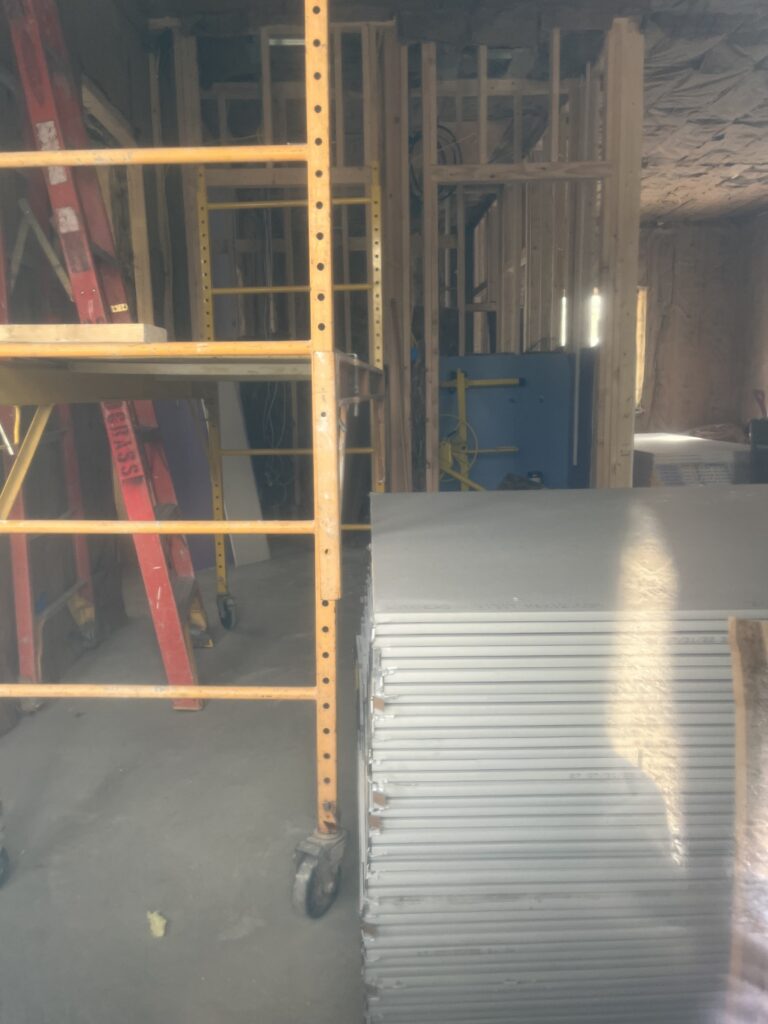
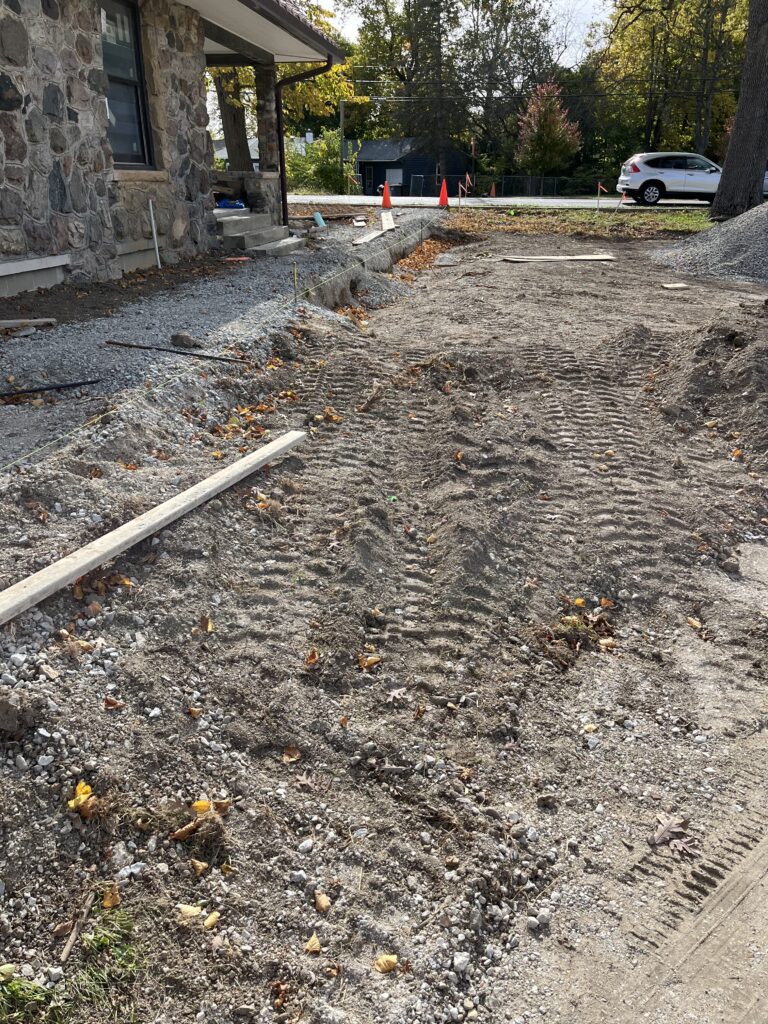
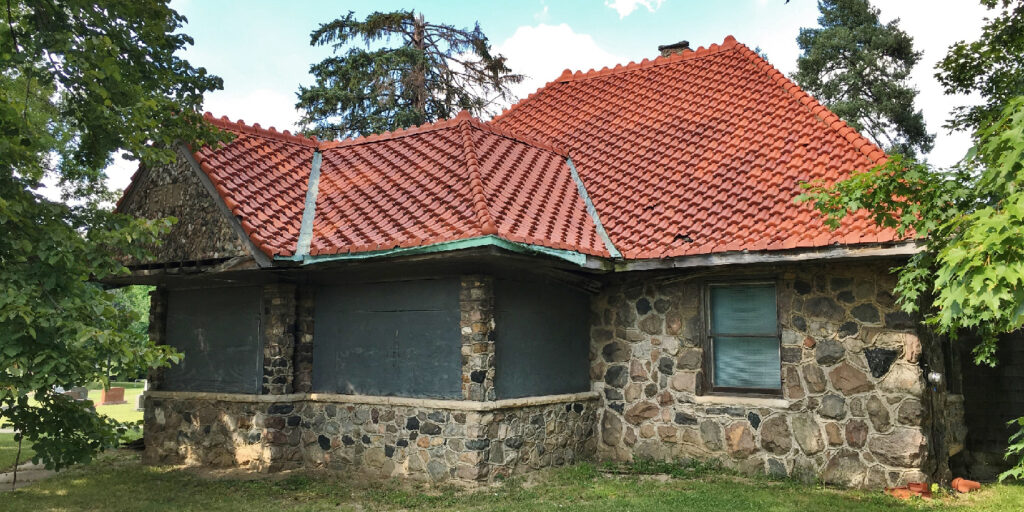
Decades of vacancy and neglect had taken a toll – broken windows, crumbling masonry, a large hole in the roof, and a partially collapsed floor – and left the place in precarious shape. The house looked like a goner, until Wabash Valley Trust for Historic Preservation put it in the spotlight by adding it to its Endangered List. Encouraged by public support for saving the landmark, city officials struck a deal to buy the cottage earlier in 2017, with plans to restore it as a local history center for exhibits using the West
Lafayette Public Library’s city archives. To finance the rehab, the city created a community preservation fund, allowing supporters to donate to the project. A team of local citizens called Community Historical Project Support (CHiPS) took charge of fundraising, securing grants and public donations.
The WL Redevelopment Commission stepped in and finished the project in 2023 at the cost of around $650,000, with Kettelhut Construction and J.R. Kelly Company doing much of the work. The Caretaker’s Cottage is a labor of love, and has been since this project started years ago. This community should be proud, because something truly amazing is happening when precious things like this can be restored, preserved, and shared with the rest of West Lafayette.
Upcoming Exhibits – Check back in 2026!
Capturing Change, Frame by Frame: The J.C. Allen Family Photo Collection – Coming Spring 2026
Coming in Spring of 2026, we will install an exhibit featuring parts of our massive J.C. Allen Family Photo Collection. John Calvin Allen was from Illinois, but due to his father’s veteran status from serving the Union Army in the Civil War he was able to live on one of the farms near the Indiana State Veterans Home at the turn of the century. Soon after meeting his wife, Abbie Peavey from Clay City, he came into possession of a camera that he soon took a liking to using. First hired as a photographer to take pictures of prize livestock candidates for ease of judging at agricultural showcase events, he eventually went on to become the official photographer for the Purdue School of Agriculture. Allen did very well with his work at Purdue, as well as building a lively photography business based in West Lafayette called J.C. Allen & Son Photography.
The name was apt, as his family played an outsized role in his work personally and professionally. One of the ways J.C. made decent money was by taking advertisement photos of the latest technological machines and appliances, many of which he took inside his brand new home built at 1341 Northwestern Avenue in West Lafayette (and almost all featured his family members as models). We meet J.C. through his photos, and the correspondence that was donated with his collection. We meet his wife, Abbie, through her letters as well. Their children, Martha and Chester, were raised in West Lafayette and attended school here locally. Chester, first serving in the military, went into the family business with his father (a business he would later inherit). Martha, from whose descendants we received the donation of this collection, graduated from Purdue in 1934 and married John Benham (also at Purdue University) in 1937.
This collection is very interesting, in that the photographer not only captured personal scenes of his family from various points in the early 20th century, but also staged his family in advertisement photos selling products throughout the same period. Also donated with the photos and associated negatives, in addition to various correspondences, was a handful of personal diaries written by Martha during her teenage years growing up in West Lafayette in the 1920’s. This exhibit will feature different aspects from this collection that help to highlight the larger focuses of this story.
Will the Real Caretaker Please Stand Up? – Coming in Spring 2026
Coming in Spring of 2026, we will install an exhibit exploring the titular role of Caretaker at the Caretaker’s Cottage. Including a light history of the cemetery itself, this exhibit will feature our research about previous caretakers, what the role of caretaker looked like historically as well as how often there was such a person working/living there, and why the cemetery is so oddly-organized today (including why there are currently houses behind it along the Happy Hollow Ridge.
Learn more about those who made this physical building in Grandview Cemetery historic, and learn more about how our local community used to operate at a time when the area immediately around the cottage was still tiny, local farms. The exhibit will feature photos, a few different family histories, and large map of the cemetery’s footprint. Patrons will also be able to take our self-guided cemetery tour from this exhibit.
Mayors of West Lafayette – Coming in Spring 2026
Coming in Spring of 2026, we will install an exhibit profiling the previous mayors of West Lafayette, Indiana. Why was our first mayor not elected until 1924, even though West Lafayette became a thing in 1888? How many mayors have we had, and what all did they do; who were they? Using our own collection at the West Lafayette Public Library Archive Collections as well as material from newspaper archives, we will build profiles on all previous mayors of West Lafayette from Myron Morgan (1924-1938) to John Dennis (2008-2024).
The Work of Preservation: West Lafayette’s Historic Preservation Commission – Coming in Spring 2026
Coming in Spring of 2026, we will install a small exhibit designed to highlight the work of the West Lafayette Historic Preservation Commission in our community. The exhibit will inform patrons on the work being done in our community to protect local history through preservation initiatives, explain why preservation is so beneficial to local communities, and highlight the commission’s goals moving forward for what is necessary to safeguard history in our communities through community action and municipal support.
Previous Exhibits (Photos Included)
Stewards of the Land: Environmental History Topics from West Lafayette – Spring 2025
Coming in the Spring of 2025, we will be installing an exhibit about environmental history topics from Greater Lafayette in partnership with NICHES Land Trust. The exhibit will feature a map of NICHES properties community members can visit, explore the legacy of environmental history topics like the failed Lafayette Dam project, and learn more about the West Lafayette Tree Friends and the creation of Celery Bog.
West Lafayette Sultans of Swing – Spring 2025
Coming in Spring of 2025, we will install a curated collection of sports memorabilia items from the Orlando Itin Local Sports History Collection at WLPL. This large collection features items and information about a number of players in various sports, and this exhibit will focus on baseball players from West Side and Harrison who eventually played in the major leagues.
Red Devils: A Century of Football – Fall 2024
The year was 1940 and a young Purdue graduate was hired as the football coach to lead the West Lafayette High School team to victory. With high school sporting successes under his belt Coach Straley joined the US Army during WW II and saw military service with George Patton’s 3rd army in Europe.

Returning to lead the West Lafayette high school team after the war, Straley became the high school’s head football coach until 1975, coaching high school basketball as well until 1952. Coach Straley served as head of the West Lafayette High School athletic department from 1954 until his retirement in 1980.

Coach Straley was inducted into the Indiana Football Hall of Fame in 1980. The West Lafayette High School Football field on Cumberland Avenue was named in his honor in 1998, just after he finished a history of the West Lafayette High School football program, “More Than A Game”, which told the high school’s football teams’ stories from 1901 to 1993.
Many of the articles and photos in the book come from the in-depth scrapbooks Straley kept with the assistance of his wife from his first year of coaching in 1940 forward; the scrapbooks were donated to the West Lafayette Library’s archives after Coach Straley’s death in 1999.


Winged Seeds Take Root: Frank Lloyd Wright in West Lafayette – Fall 2024
In the early 1950s, Purdue University professor Dr. John Christian and his wife Catherine dreamed of a home that would serve both their desire to entertain faculty, staff, and students and be a lasting structure that would grow with their family. Research, perseverance, and a touch of luck led the Christians to Frank Lloyd Wright with whom they built their dream home.


The John and Catherine Christian House, commonly known as SAMARA, is one of the most complete Frank Lloyd Wright homes in the United States. Designated as a National Historic Landmark in 2015, SAMARA affords national and international visitors of all ages the rare and immersive opportunity to experience Mr. Wright’s fully realized Usonian design just as if they were guests of the family.
Samara, named for the winged seeds found in pinecones, was completed in 1956 near the end of Mr. Wright’s career. The home was built on a modest budget and with the caveat that the clients would see the famous architect’s designs through to full completion.


John and Catherine held true to this commitment and the architect’s vision. Samara is an approachable and educational work of art that proudly features more than 40 of Mr. Wright’s architectural innovations and plays host to thousands of visitors annually.
Today, Indiana Landmarks co-stewards Samara with the John E. Christian Family Memorial Trust, Inc., working to preserve the extraordinary property and share its remarkable story.
An Interpretive History of West Lafayette – Spring/Summer 2024
The Chauncey Family, who were rich land speculators from Philadelphia, purchased the land neighboring Kingston and platted the town of Chauncey on January 18, 1860. At this time, all of West Lafayette south of State Street and east of Salisbury was thick woodlands and there were approximately two dozen homes and five main roads through Kingston and Chauncey. Some we might recognize (State, River, Salisbury), but others were only in their infancy as ideas; Robinson St. was just a plank road.

The story of the West Lafayette we know today began in the cabin home of Mr. James H. Marsteller on January 2, 1866. Whether it was to maximize tax income for public investment or shore-up local authority in the township by combining separate towns into a stronger one, these citizens were determined to make something happen. By late February that same year, a census was taken to determine who could vote; of the 93 men and 104 women, only 48 people were legally allowed to vote. Then, in December, the voters of Kingston/Chauncey decided to levy a tax of $0.20 per $100.00 made. They could not, however, decide on a new name. Many suggestions were floated, including Kingston, Chauncey, West Lafayette, Brooklyn, Lowell, Peckham, and Roswell. After nearly two decades of debate, the town voted on May 21st, 1888, to rename the town West Lafayette.


By the time this name was chosen, Purdue University had been located nearby Chauncey, Indiana for almost as long as it took the town to pick a new name. The introduction of Purdue to the community landscape during a period where community members were organizing to better invest in their own future is a very important moment in the history of West Lafayette. Only a generation after this historic moment, we begin to see very interesting characters entering the record.
Chivalry in Shelbyville: Historical Thinking, 1898-2024 – Spring/Summer 2024
This exhibition is being developed by a class at the John Martinson Honors College at Purdue University under Dr. Kristina Bross. The focus is on Charles Major, a notable Hoosier author lost to the sands of time. He wrote When Knighthood Was in Flower over a century ago, and Dr. Bross’s class aims to explore that novel with the aim to release a new edition of it in the future.

The Caretaker’s Cottage in the News